Pathological Anatomy
It focuses on studying the causes, progression, and consequences of diseases through the accurate diagnosis of biopsies, surgical specimens, and cytology samples.
 Agrarismo 208, Escandón II Section, 11800 México City, CDMX
 +52 55 5516 9900
Ext. 1138, 1260 o 1262
+52 55 5516 9900
Ext. 1138, 1260 o 1262
 9:00 a.m. – 9:00 p.m.
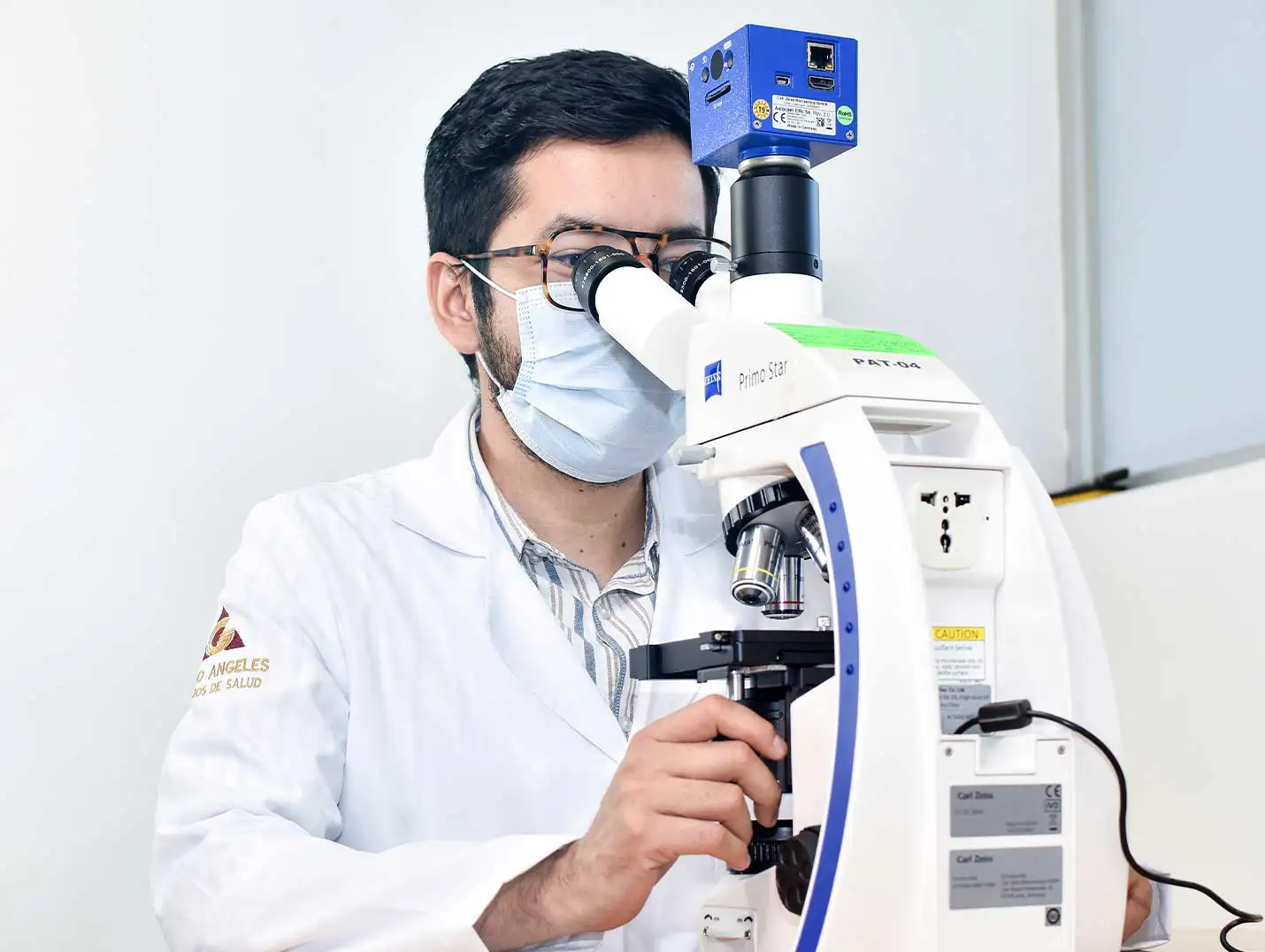
The Pathology Laboratory at Hospital Angeles México the bridge between the specimen and the clinical decision. Every tissue and every cell is processed using a specific method: proper reception and fixation, careful histological processing, and microscopic evaluation by specialists who integrate the findings with the patient’s medical history and imaging studies. The goal is to convert microscopic information into clear answers that guide diagnosis and treatment with accuracy and timeliness.
The service covers histopathology and cytopathology. In the former, the analysis of biopsies and surgical specimens allows for the distinction between benign and malignant processes, the assessment of margins, the description of morphological patterns, and the documentation of the extent of tissue involvement. In the latter, the study of cells from body fluids or diagnostic brushings detects subtle changes that guide the need for additional studies or closer follow-up. When the case warrants it, special stains or immunohistochemistry are used to more precisely characterize the origin of a neoplasm and its biological behavior.
In oncological settings, pathological anatomy can determine the need for adjuvant treatments, the extent of surgery, or the monitoring regimen. In inflammatory, infectious, or autoimmune diseases, it helps determine the extent of tissue damage and adjust therapies. Clinical-pathological correlation is a daily practice: the same microscopic pattern can have different implications depending on the context, making the integration of patient data essential. This comprehensive interpretation is what adds value to the report and reduces uncertainty when time is of the essence.
Choosing a laboratory with a proven track record in surgical pathology, targeted biopsies, and cytology means gaining access to timely diagnoses that positively impact treatment outcomes. The Pathology Laboratory at Hospital Angeles México to ensure that every sample is processed with rigor and every report is delivered with the precision required by clinical teams.
The pathological anatomy laboratory is a medical department responsible for the study and diagnosis of diseases through the analysis of tissue and cell samples.
The pathological anatomy laboratory is essential for the accurate diagnosis of diseases, as it allows for the identification of abnormalities in tissues and cells that may indicate the presence of pathologies.
In the pathological anatomy laboratory, tests are conducted using microscopy, molecular analysis, and cytology, among other techniques, to examine tissue and cell samples and obtain accurate information about potential diseases.
The turnaround time for results at the pathology laboratory can vary depending on the type of test and the complexity of the case, but it generally ranges from 24 to 72 hours.
The pathological anatomy laboratory can diagnose a wide variety of conditions, including cancer, infectious diseases, autoimmune diseases, and genetic disorders, among others.