Through tests such as esophageal and anal manometry and pH monitoring, we are able to provide timely endoscopic diagnoses for our patients.
 9670 Bernardo Quintana Arrioja Boulevard, Centro Sur, 76090 Santiago de Querétaro, Querétaro
 +52 442 261-4200
Ext.
+52 442 261-4200
Ext.

The Endoscopy Department at Hospital Angeles Centro Sur technology to diagnose and treat various diseases and conditions, such as ulcers, tumors, inflammation, and bleeding. This procedure involves inserting a thin, flexible tube through the mouth or rectum to examine the inside of the body.
At Hospital Angeles Centro Sur a team of specialists highly trained in endoscopy. Our doctors use state-of-the-art technology to perform this procedure safely and accurately. In addition, we focus on providing quality service and personalized care to each patient.
During the endoscopy, our specialists can take tissue samples for laboratory analysis, perform biopsies, and carry out therapeutic procedures, such as polyp removal or dilation of narrowings. Our goal is to provide our patients with an accurate diagnosis and effective treatment.
If you need to undergo an endoscopy, trust Hospital Angeles Centro Sur. Our medical team is ready to provide you with the best possible care. Contact us to schedule an appointment.
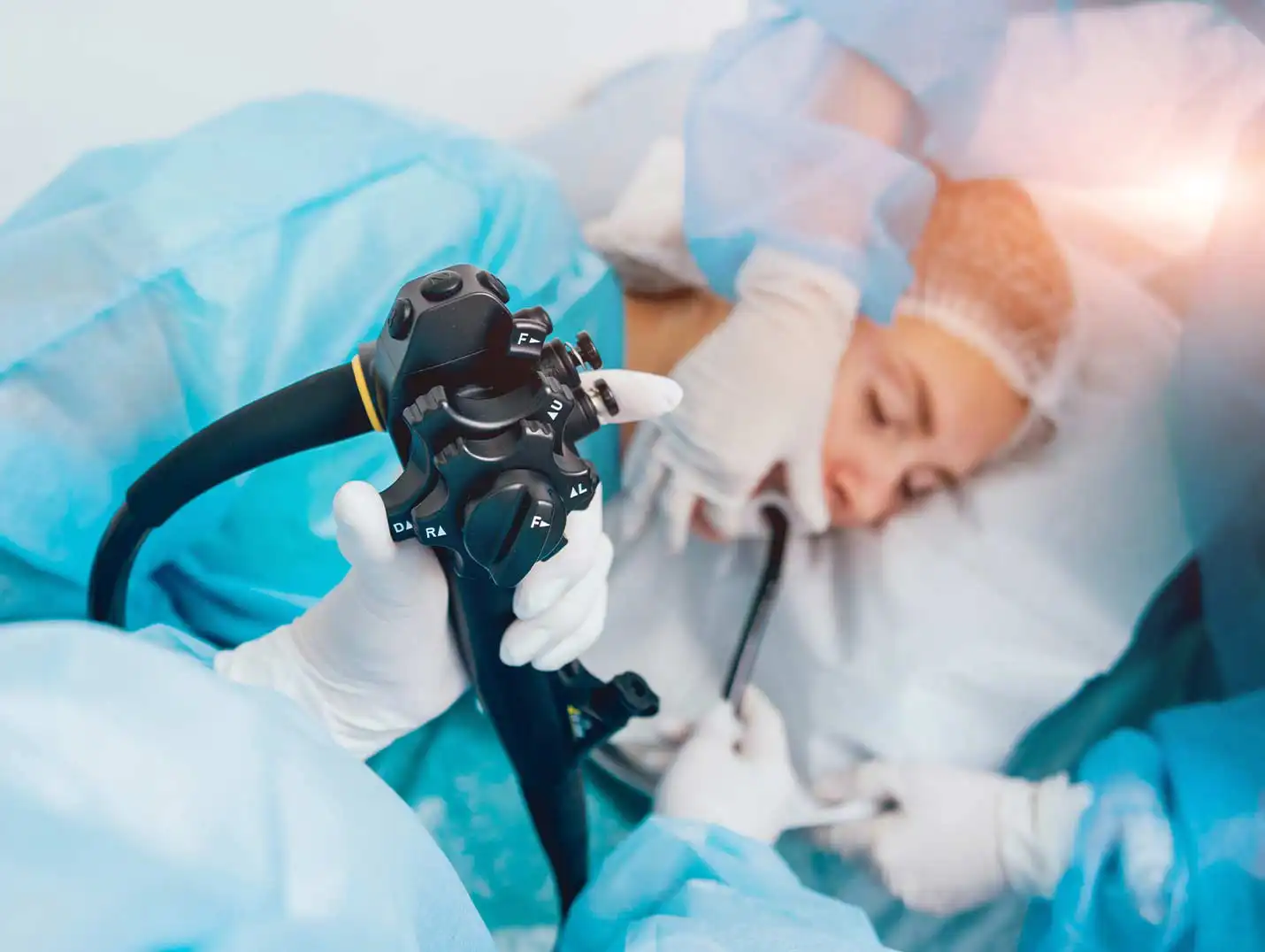
Endoscopy is a medical procedure that uses a device called an endoscope to examine the inside of certain organs or body cavities, such as the esophagus, stomach, or colon.
Endoscopy is used to diagnose and treat various conditions, such as ulcers, tumors, inflammation, bleeding, blockages, and other abnormalities in the digestive system.
During an endoscopy, the endoscope is inserted through a natural opening in the body, such as the mouth or anus, and guided to the area to be examined. The endoscope has a camera at its tip that allows the doctor to view the inside of the organ or cavity in real time.
Endoscopy is usually performed under sedation or local anesthesia, so most patients do not feel any pain during the procedure. However, they may experience minor discomfort, such as a feeling of pressure or bloating.
Although endoscopy is a safe procedure, there are some associated risks, such as organ perforation, bleeding, infection, or adverse reactions to sedation. However, these risks are rare and are usually managed by the medical team.