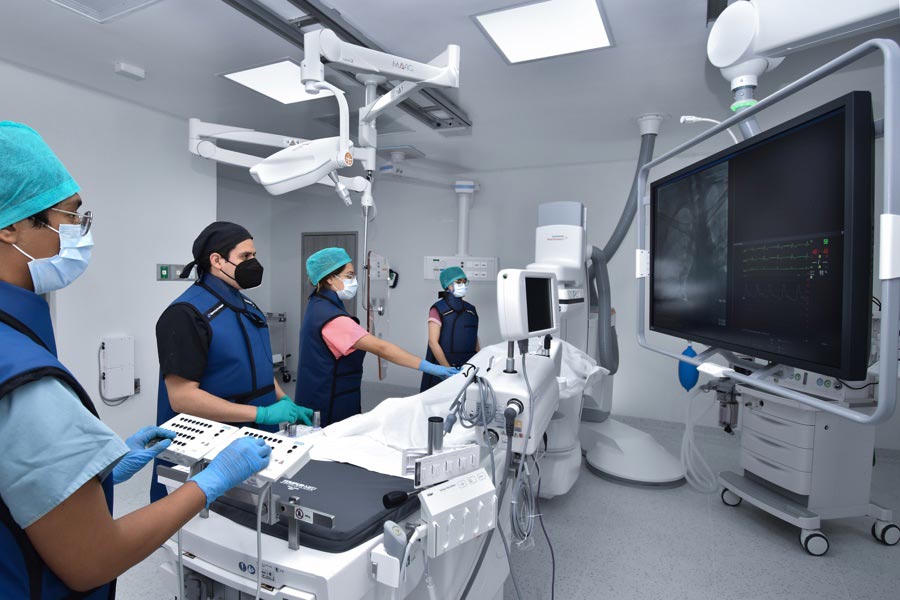
Through tests such as esophageal and anal manometry and pH monitoring, we are able to provide timely endoscopic diagnoses for our patients.
 Universidad Ave., Xoco, Benito Juárez, 03339 México City, CDMX
 +52 55 7256 9800
Ext. 5041, 5042
+52 55 7256 9800
Ext. 5041, 5042
 For more information, please contact Admissions
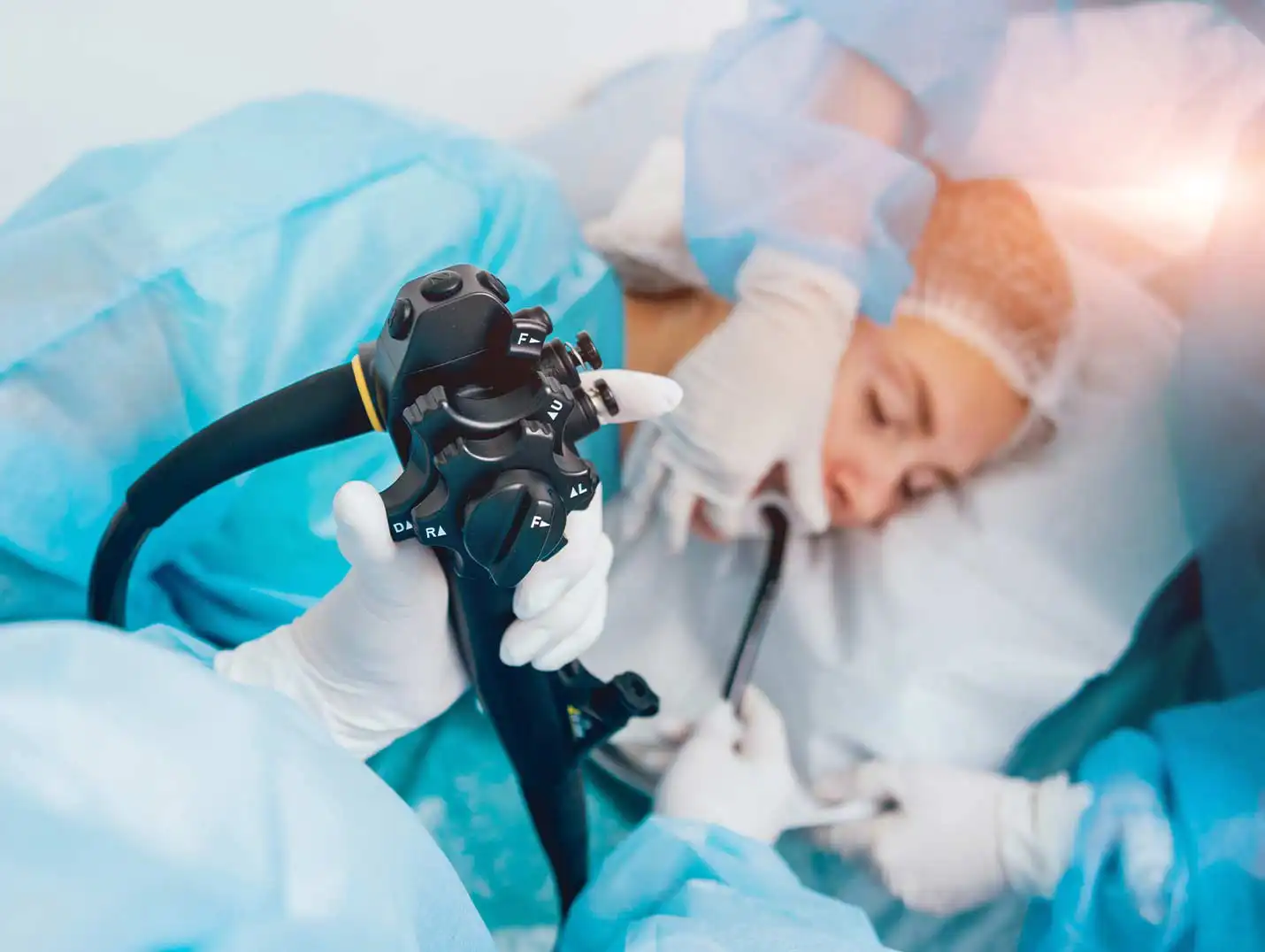
Endoscopy is a medical procedure that uses an instrument called an endoscope to examine the inside of certain organs or body cavities.
Endoscopy is used to diagnose and treat various diseases and conditions, such as ulcers, tumors, inflammation, bleeding, blockages, and other abnormalities in the digestive, respiratory, urinary, and reproductive systems.
During an endoscopy, the endoscope is inserted through a natural opening in the body, such as the mouth, anus, or urethra, and guided to the area to be examined. The endoscope has a camera at its tip that allows the doctor to view the inside of the organ or cavity in real time.
Endoscopy is usually performed under local anesthesia or sedation, so most patients do not feel any pain during the procedure. However, they may experience minor discomfort, such as pressure or bloating, but these symptoms are usually temporary.
Although endoscopy is a safe procedure, like any medical procedure, there are some potential risks. These may include perforation or bleeding in the examined area, infection, adverse reactions to anesthesia, or allergies to the medications used during the procedure. However, these risks are rare and are usually managed by the medical team.