Care for patients with digestive disorders, using state-of-the-art diagnostic procedures such as esophageal and anal manometry, pH monitoring, and various endoscopic examinations.
 639 C. Rio Bamba, Magdalena de las Salinas, Gustavo A. Madero, 07760 Mexico City, México
 +52 55 5754 7000
Ext. 2495
+52 55 5754 7000
Ext. 2495
 7:00 a.m. to 9:30 p.m.
Endoscopy is a medical procedure in which an endoscope is used to examine the inside of organs or body cavities. It is used to diagnose and treat various diseases and conditions.
The benefits of endoscopy include the ability to obtain an accurate diagnosis, the ability to perform minimally invasive treatments, and a reduced need for open surgery.
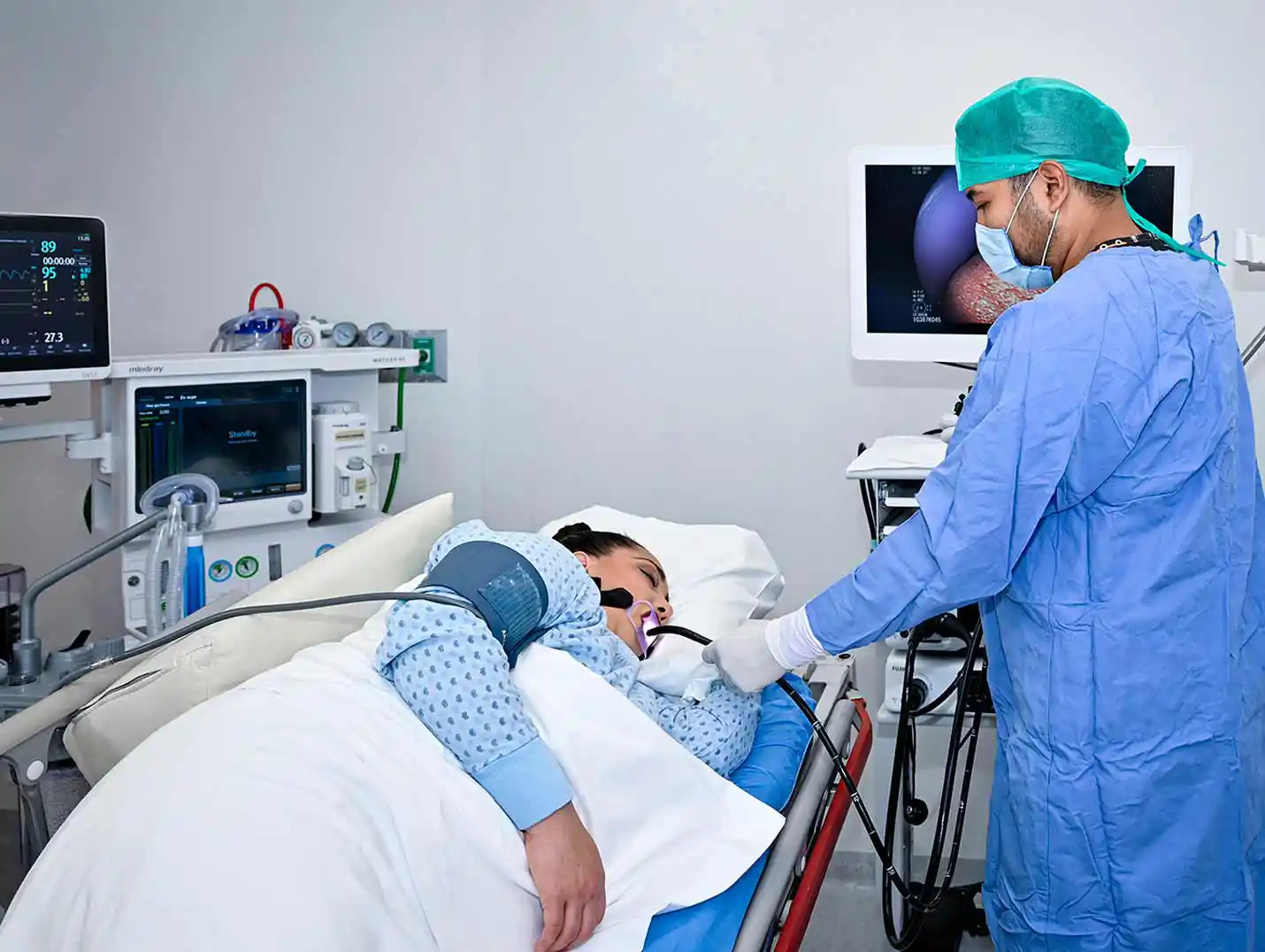
During an endoscopy, a flexible endoscope is inserted through a natural opening in the body, such as the mouth or the rectum. The endoscope has a camera at the tip that allows the doctor to view the inside of the organ or cavity.
An endoscopy is usually performed under sedation or local anesthesia, so the patient should not feel any pain during the procedure. However, they may experience minor discomfort after the endoscopy, such as a sore throat or a feeling of bloating.
The duration of an endoscopy can vary depending on the type of procedure and the area of the body being examined. In general, an endoscopy can last anywhere from 15 minutes to an hour.