Hemodialysis and Peritoneal Dialysis
Treatment for acute or chronic kidney failure, with state-of-the-art equipment and trained staff dedicated to improving patients’ quality of life, supported by the expertise of nutritionists and psychologists.
 Vialidad de la Barranca (no number), Hacienda de las Palmas, 52763 Huixquilucan, Mexico
 +52 55 5246 5000
Ext. 5990
+52 55 5246 5000
Ext. 5990
 Monday through Friday from 7:30 a.m. to 9:00 p.m. / Saturday from 7:30 a.m. to 12:30 p.m.
Specialized care for patients with chronic kidney disease
The Hemodialysis Unit at Hospital Angeles Lomas provides comprehensive care to patients with chronic kidney disease who need to remove toxins, waste, and excess fluids from their bodies.
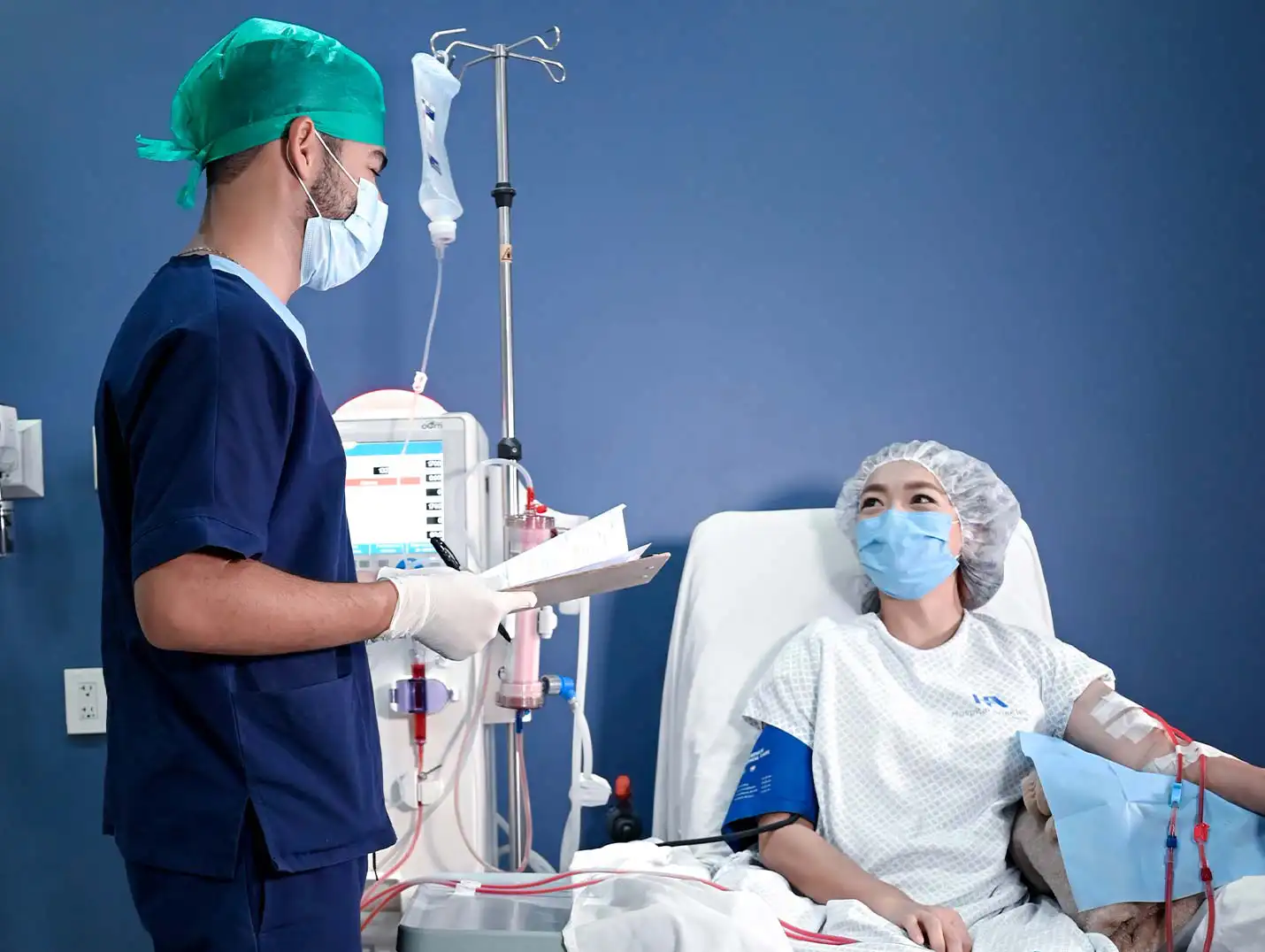
During the procedure, the patient’s blood passes through specialized equipment that functions as an artificial kidney, filtering it and balancing fluid and electrolyte levels to maintain stable bodily function.
Advanced technology and specialized staff
Our service is provided by a team of nephrologists, specialized nurses, and staff trained in renal therapy, all committed to delivering safe, precise, and personalized care during every session.
We utilize state-of-the-art equipment and continuous monitoring to ensure effective treatment and high-quality standards.
Personalized care and ongoing support
At Hospital Angeles Lomas , we understand that hemodialysis is a frequent and long-term process. That is why we have created a comfortable, safe, and supportive environment where every patient receives professional care with a warm and compassionate approach throughout their treatment.
If you or a loved one needs hemodialysis, we’re here to support you. At Hospital Angeles Lomas specialized kidney care, close monitoring, and a team dedicated to improving your well-being and quality of life.
Hemodialysis is a medical procedure used to filter and clean the blood of people whose kidneys are not functioning properly. It is used to treat chronic kidney disease.
A hemodialysis session usually lasts about 3 to 4 hours. However, the duration may vary depending on each patient's needs and condition.
The frequency of hemodialysis sessions depends on the patient's health and the doctor's recommendation. Generally, they are performed 3 to 4 times a week.
Some of the risks and complications associated with hemodialysis may include infections, changes in blood pressure, muscle cramps, nausea, and vomiting, among others. However, it is important to note that these risks are managed and monitored by the medical team.
Hemodialysis itself is not painful, as it is performed using a machine and a vascular access site. However, some patients may experience minor discomfort when the needles are inserted into the vascular access site. The medical team will take steps to minimize any discomfort during the procedure.