Cardiology Center - Cardiovascular Center
Cardiology Department at Hospital Angeles your heart with our team of specialists and state-of-the-art medical technology—prevention is your best ally
 155 Antonio Aguilar Street, Burocratas del Estado, San Luis, San Luis Potosí, México
 +52 4448340300
Ext. 5702
+52 4448340300
Ext. 5702
 Monday–Friday: 8:30 a.m.–4:00 p.m. Saturday: 8:00 a.m.–2:00 p.m.
Cardiology is a medical specialty that focuses on the diagnosis and treatment of diseases related to the heart and blood vessels. At Hospital Angeles San Luis Potosí a team of highly trained and experienced cardiologists who provide quality services and personalized care to our patients.
Our cardiology services include a wide range of tests and procedures to assess our patients’ cardiovascular health. We perform electrocardiograms, echocardiograms, stress tests, and ambulatory blood pressure monitoring, among others. These tests allow us to detect and diagnose heart diseases, such as high blood pressure, coronary artery disease, and arrhythmias.
We also offer medical and surgical treatments to address various heart conditions. Our team of cardiologists works closely with other specialists, such as cardiovascular surgeons and cardiac rehabilitation specialists, to provide a comprehensive and multidisciplinary approach to patient care.
At Hospital Angeles San Luis Potosí strive to provide high-quality cardiology services, using state-of-the-art technology and adhering to the highest standards of medical care. Our goal is to improve our patients’ quality of life and help them maintain a healthy heart. If you’re looking for reliable and professional cardiology care, don’t hesitate to visit us.
Cardiology is a medical specialty that focuses on the study, diagnosis, and treatment of diseases of the heart and circulatory system.
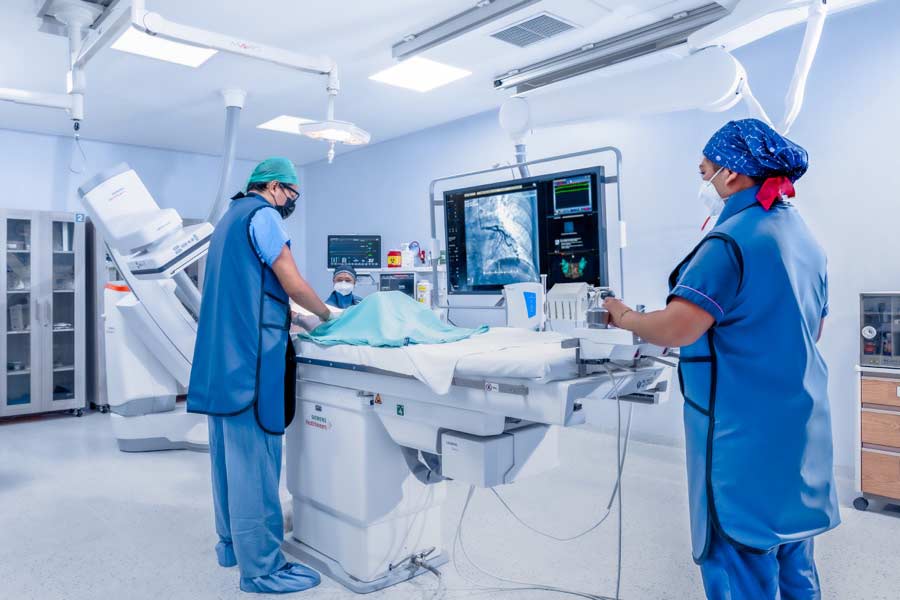
The cardiology department offers a wide range of services, including electrocardiograms, echocardiograms, stress tests, and cardiac catheterizations, among others. It also provides specialized care for the treatment of heart conditions such as hypertension, heart failure, arrhythmias, and heart attacks.
It is recommended that you see a cardiologist if you experience symptoms such as chest pain, shortness of breath, palpitations, dizziness, or fainting. It is also important to have regular checkups with a cardiologist as part of your routine health care, especially if you have a family history of heart disease or risk factors such as obesity, diabetes, or smoking.
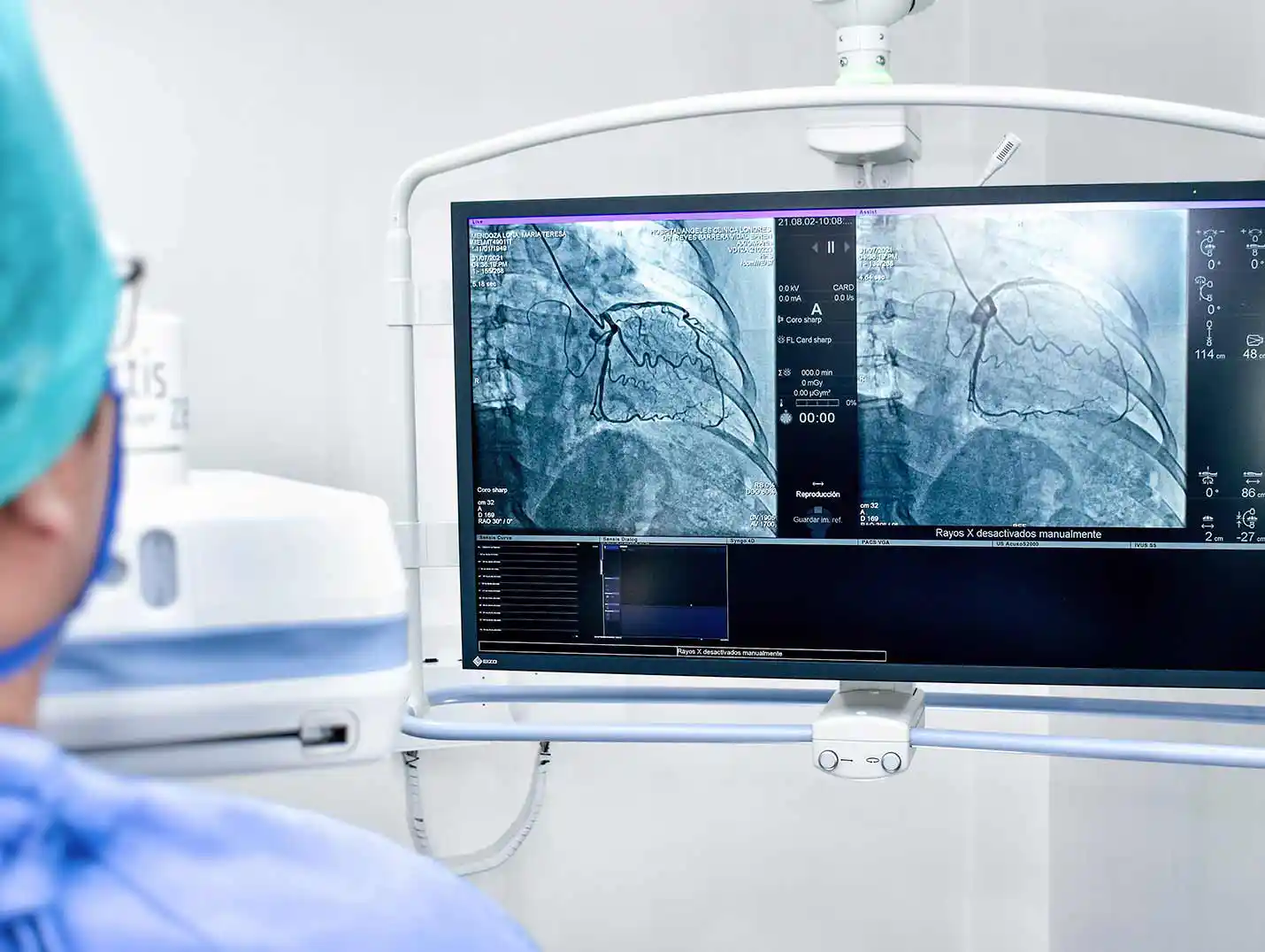
Heart disease is diagnosed through various tests and procedures, such as electrocardiograms, echocardiograms, stress tests, Holter monitoring, and cardiac catheterization. These tests allow for the evaluation of heart function, the detection of potential abnormalities, and the determination of the most appropriate treatment.
The goal of treatment in cardiology is to improve patients' quality of life, prevent complications, and reduce the risk of cardiovascular events such as heart attacks or strokes.