Vascular Radiology and Interventional Radiology

Vascular Radiology and Interventional Radiology

At Hospital Angeles, interventional and vascular radiology teams work together to translate medical images into clinical decisions that provide the best possible care for patients with minimal impact. They use imaging guidance—such as ultrasound, CT scans, and fluoroscopy—to diagnose and treat various diseases of the vascular system and other organs using minimally invasive techniques. This approach allows for the resolution of complex problems with shorter hospital stays, faster recovery, and less pain than open surgical procedures.
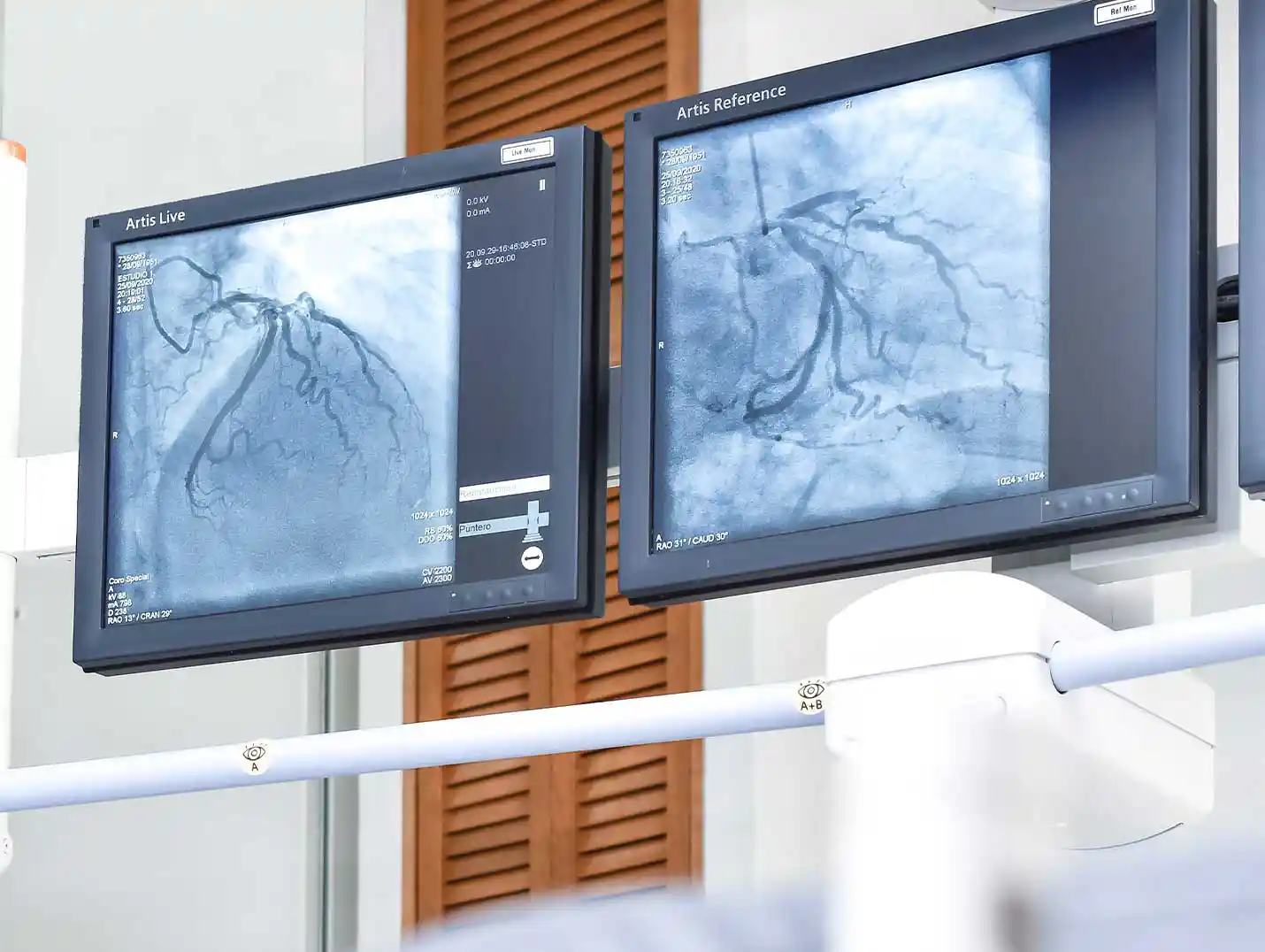


Images of veins displayed on two white monitors during a cardiac catheterization procedure Images of veins displayed on two white monitors during a cardiac catheterization procedure

Blue location pin icon on a white background. 560 México Highway, Pastoresa, 91193 Xalapa, Ver.

+52 228 141 0800 Ext. 2220

8:00 a.m. to 9:00 p.m.

Vascular radiology at Hospital Angeles Xalapa a treatment method that uses medical imaging to address problems in the vascular system with minimal incisions and a faster recovery. Our Vascular Radiology and Interventional Radiology service integrates ultrasound, computed tomography, and fluoroscopy to precisely locate the site to be treated and guide thin catheters through arteries or veins to the exact point of the lesion.

Each procedure begins with a clinical and imaging evaluation that analyzes medical history, symptoms, and findings to determine whether the endovascular approach is the first-line option or the ideal complement to other therapies. When indicated, the plan is explained step by step: preparation, consent, pre- and post-procedure care, as well as the expected benefits and potential risks, so that the patient can make informed decisions with the support of the treating team.

During the procedure, vital signs are monitored, sedation or anesthesia is adjusted as needed, and state-of-the-art equipment is used to facilitate intravascular navigation and secure closure of the puncture site. Once the procedure is complete, immediate recovery is monitored, clear instructions for home care are provided, and follow-up appointments are scheduled to assess clinical response and reinforce preventive measures. For people with cardiovascular risk factors such as high blood pressure, diabetes, high cholesterol, or smoking, endovascular alternatives can improve blood flow and alleviate symptoms related to ischemia in the extremities or other vascular territories.

The vascular radiology service at Hospital Angeles Xalapa advanced technology, expertise, and multidisciplinary collaboration with angiology, vascular surgery, cardiology, oncology, and internal medicine. This coordination enables the design of individualized strategies, the evaluation of alternatives, and the selection of the best therapeutic approach based on each patient’s needs and goals.

Frequently Asked Questions

Vascular Radiology and Interventional Radiology is a medical specialty that uses imaging techniques to diagnose and treat diseases of the blood vessels and other medical conditions through minimally invasive procedures.

This service is used to treat a wide variety of medical conditions, including arterial and venous diseases, aneurysms, vascular malformations, thrombosis, and embolisms, among others.

Some of the most common procedures performed in Vascular Radiology and Interventional Radiology include angioplasty, stent placement, embolization, thrombectomy, image-guided biopsies, and abscess drainage, among others.

Vascular Radiology and Interventional Radiology offer numerous benefits, such as less invasive procedures, shorter recovery times, a lower risk of complications, less postoperative pain and discomfort, and the ability to treat patients who are not candidates for open surgery.

The medical team will provide you with specific instructions on how to prepare for your procedure. These may include dietary restrictions, stopping certain medications, fasting before the procedure, and the need to have someone accompany you for transportation afterward. It is important to follow these instructions exactly to ensure the safety and effectiveness of the procedure.

Hospitals that offer this service

An icon of a list inside a blue circle. Next to it is a white box with the word "contact"