Positron Emission Tomography (PET-CT)

Positron Emission Tomography (PET-CT)

Positron emission tomography (PET) is a nuclear medicine test that combines metabolic and anatomical imaging in a single scan. At the Hospital Angeles PET service, Hospital Angeles standardized protocols and advanced technology to locate lesions, measure their biological activity, and correlate it with bodily structures. This technique is essential in oncology, as it allows us to assess disease spread, evaluate response to treatment, and plan therapies with greater precision—always with safety and specialized care.
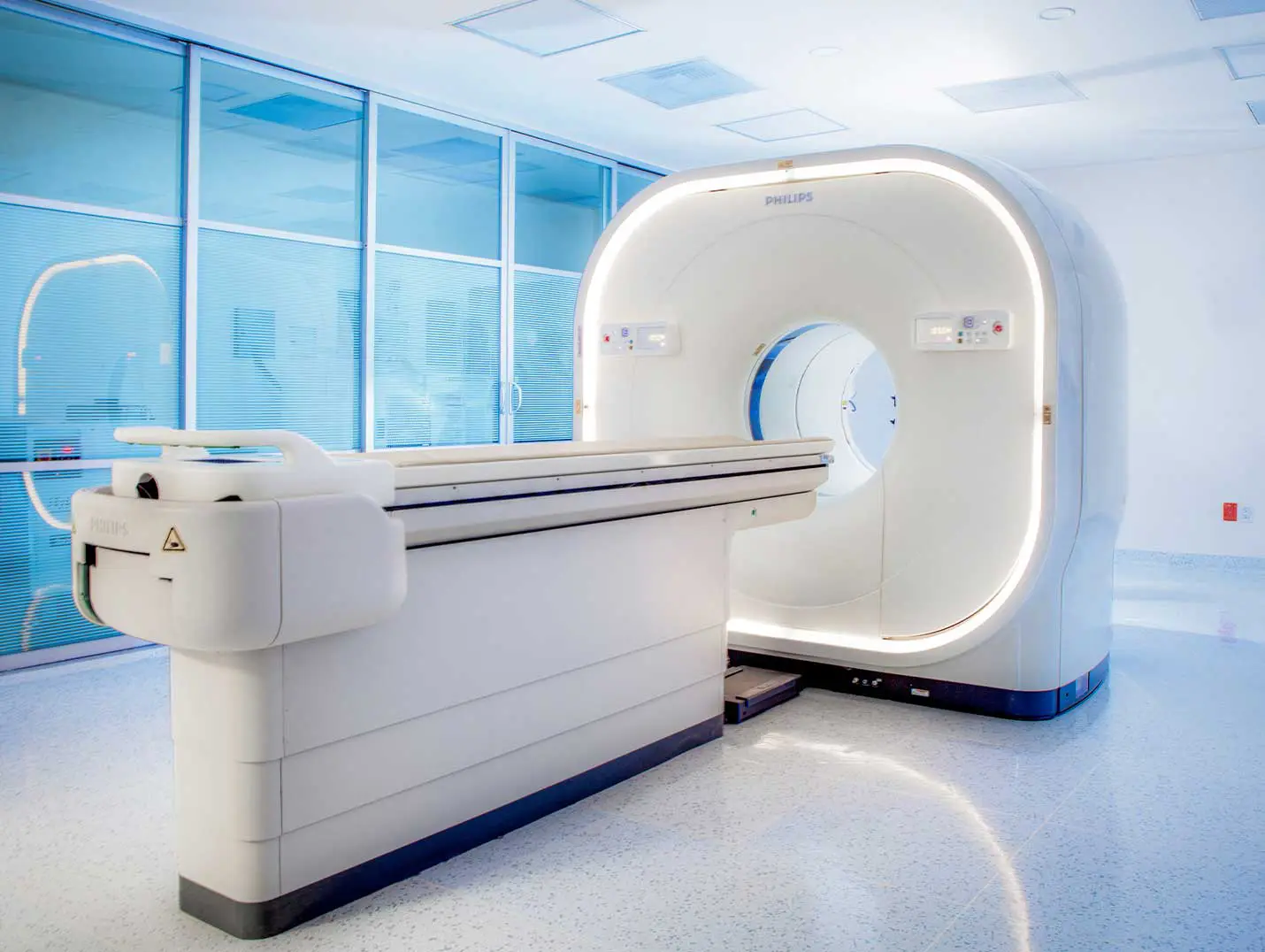


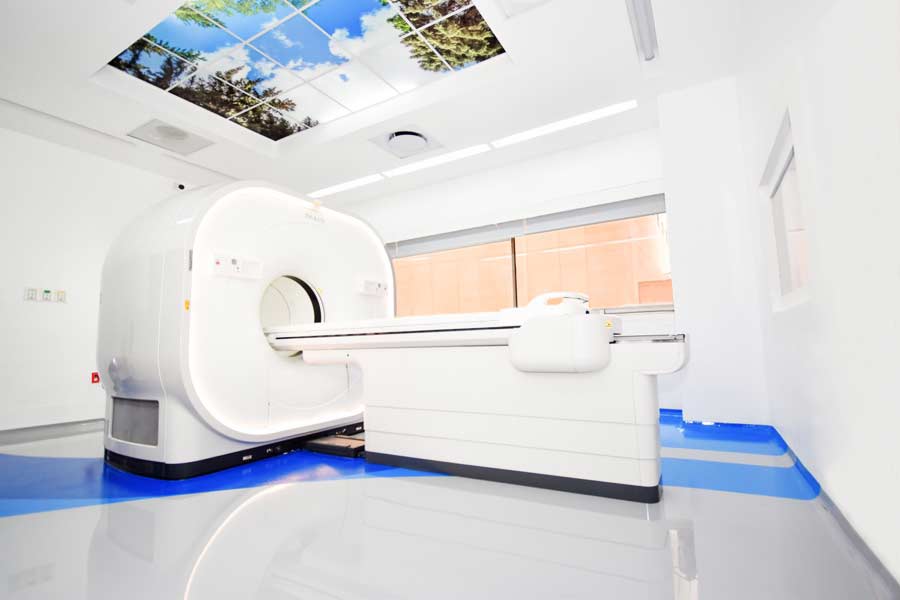
A spacious white room with glass doors and white CT scanning equipment A spacious white room with glass doors and white CT scanning equipment

Blue location pin icon on a white background. Vialidad de la Barranca (no number), Hacienda de las Palmas, 52763 Huixquilucan, Mexico

+52 55 5246 5000 Ext. 3906

Monday–Friday: 7:00 a.m.–9:00 p.m. Saturday: 8:00 a.m.–1:00 p.m.

Hospital Angeles Lomas Positron Emission Tomography-Computed TomographyLomas PET-CT) scan is a nuclear medicine test that combines metabolic and anatomical imaging in a single exam to provide a comprehensive view of the body. By observing how a radiopharmaceutical is distributed in the tissues and correlating that activity with a CT scan, key information is obtained to locate lesions, understand their biological behavior, and plan treatment with greater precision. This integration reduces diagnostic uncertainties, facilitates timely decisions, and allows for objective monitoring of the therapeutic response, always in close communication with the treating physician.

Prior to the study, preparation is guided by healthcare staff to optimize results. Depending on the clinical indication, fasting time is adjusted and glucose control is checked, especially in people with diabetes. Subsequently, a tracer is administered intravenously to assess cellular metabolism; after a brief rest period, functional images are acquired along with a low-dose CT scan that precisely locates the findings. The procedure is comfortable and painless; throughout the process, the team explains each step, verifies relevant medical history, and offers recommendations for after the study, such as maintaining adequate hydration unless otherwise indicated.

The primary use of PET-CT is in oncology, where it aids in disease staging, the detection of metastases, the assessment of treatment response, and the differentiation between active tissue and residual changes. It is also useful in cases of persistent infection or inflammation, in the evaluation of myocardial viability, and in neurological disorders where it is necessary to examine brain metabolism.

Patient safety is a priority: we apply dose optimization principles and quality control protocols. If the physician deems it appropriate to use contrast media for the CT portion, we assess the patient’s history of allergies and renal function and provide a transparent explanation of the benefits and risks.

Frequently Asked Questions

Positron emission tomography (PET-CT) is an imaging technique that combines computed tomography (CT) and positron emission tomography (PET) to produce detailed images of the inside of the body.

Positron emission tomography (PET-CT) is primarily used to detect and evaluate conditions such as cancer, heart disease, and neurological disorders. It is also used to assess response to treatment and plan surgeries.

During the procedure, the patient is injected with a small amount of a radioactive substance called a tracer. A series of images is then taken using a machine that combines computed tomography (CT) and positron emission tomography (PET).

Yes, positron emission tomography (PET-CT) is a safe procedure. However, since it uses radiation, there is a small risk of radiation exposure. The medical team will take all necessary precautions to minimize this risk.

Yes, before the procedure, you will need to follow certain instructions, such as fasting for several hours, avoiding caffeine and certain medications, and drinking plenty of water. The medical staff will provide specific instructions based on the patient’s individual needs.


Hospitals that offer this service

An icon of a list inside a blue circle. Next to it is a white box with the word "contact"