Neurophysiology provides diagnostic assessments by using specialized technology to examine the central nervous system (brain and spinal cord), the peripheral nervous system (nerves and senses), and the autonomic nervous system, offering a comprehensive analysis.
 Vialidad de la Barranca (no number), Hacienda de las Palmas, 52763 Huixquilucan, Mexico
 +52 55 5246 5000
Ext. 3047
+52 55 5246 5000
Ext. 3047
 Monday–Friday: 9:00 a.m.–7:00 p.m.
Saturday: 9:00 a.m.–1:00 p.m.
Monday–Friday: 9:00 a.m.–7:00 p.m.
Saturday: 9:00 a.m.–1:00 p.m.
Neurophysiology is a branch of medicine that focuses on the study and diagnosis of disorders of the nervous system through the evaluation of the electrical and functional activity of the brain and nerves.
In neurophysiology, various tests are performed, including electroencephalograms (EEGs), electromyograms (EMGs), evoked potentials, polysomnography, and nerve conduction studies, among others.
Neurophysiology is used to diagnose and evaluate neurological disorders such as epilepsy, sleep disorders, neuromuscular diseases, and neuropathies, among others. It is also used to monitor brain activity during surgeries and treatments.
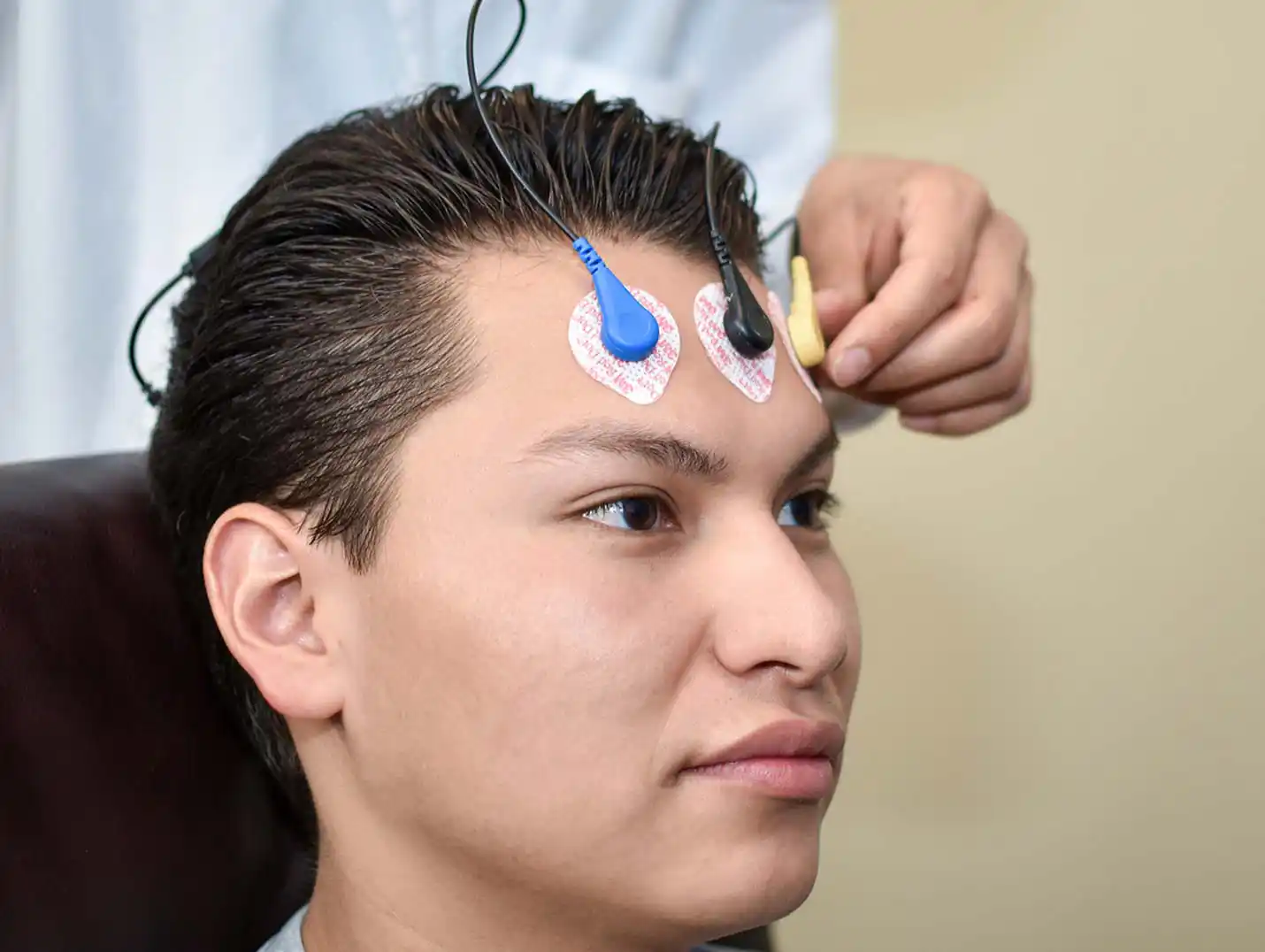
During an electroencephalogram, electrodes are placed on the scalp to record the brain's electrical activity. The patient must remain still, and the signals are recorded over a specific period of time.
For certain neurophysiological tests, such as an electroencephalogram, it is necessary to avoid taking certain medications or substances that could affect the results. Your doctor will provide specific instructions on how to prepare for each test.