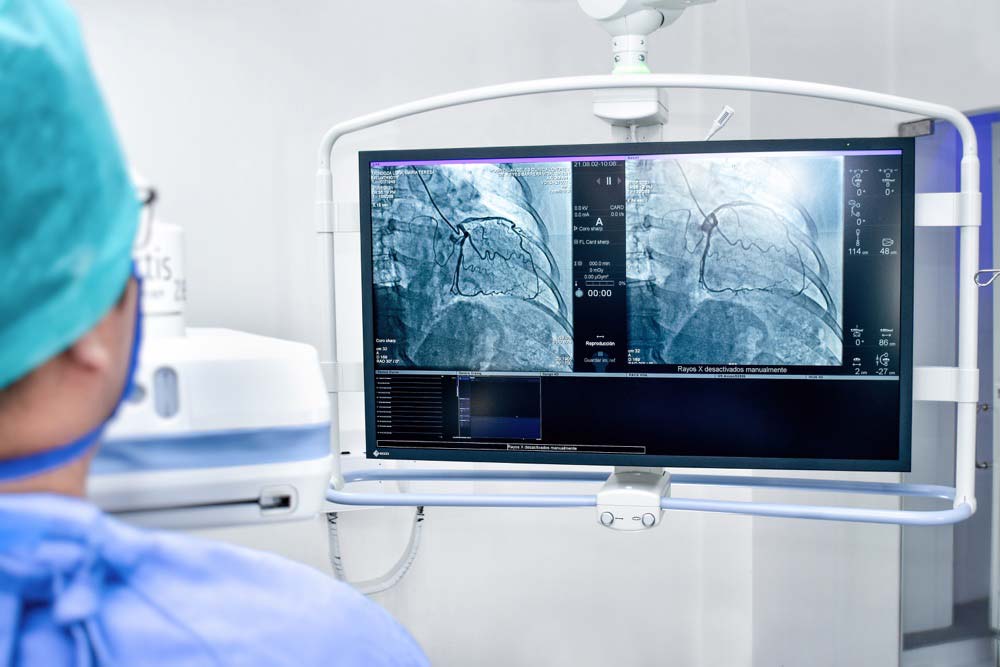
Emergency and scheduled procedures aimed at reducing the incidence and effects of cardiovascular and neurovascular diseases, using the most advanced technology.
 50 Durango Street, Roma , 06700 México City, CDMX
 +52 55 522 98400
Ext. 1311 y 1312
+52 55 522 98400
Ext. 1311 y 1312
 Monday through Friday, 8:00 a.m. to 7:00 p.m., and Saturday, 8:00 a.m. to 2:00 p.m.
Hemodynamics is a medical specialty focused on the study and diagnosis of diseases of the cardiovascular system. It is used to assess the functioning of the heart and blood vessels.
Some of the procedures performed in the cardiac catheterization lab include coronary angiography, coronary angioplasty, stent placement, embolization of tumors and vascular malformations, and radiofrequency ablation.
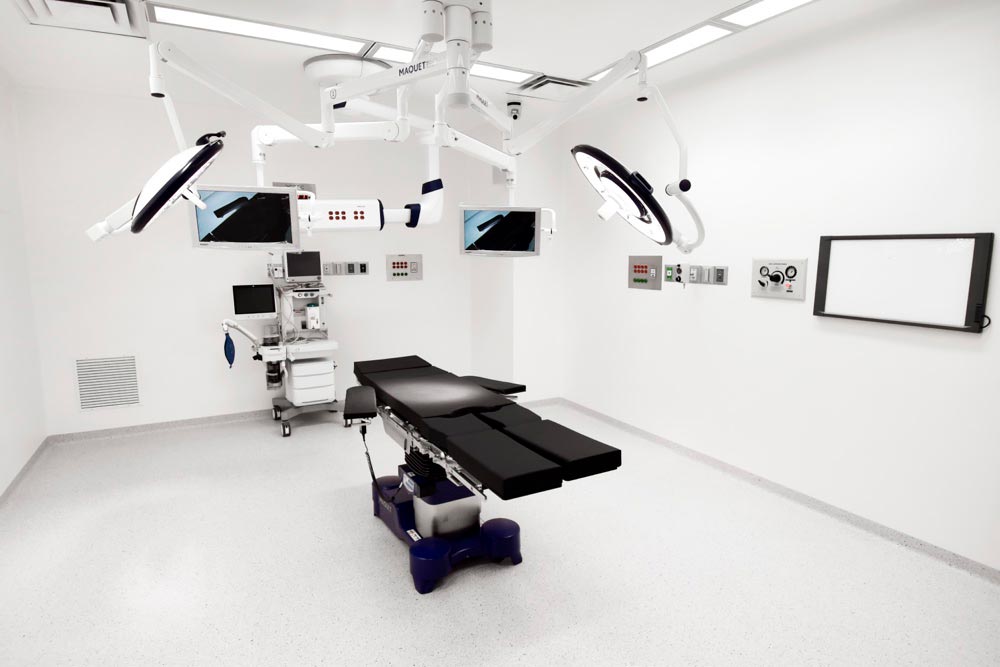
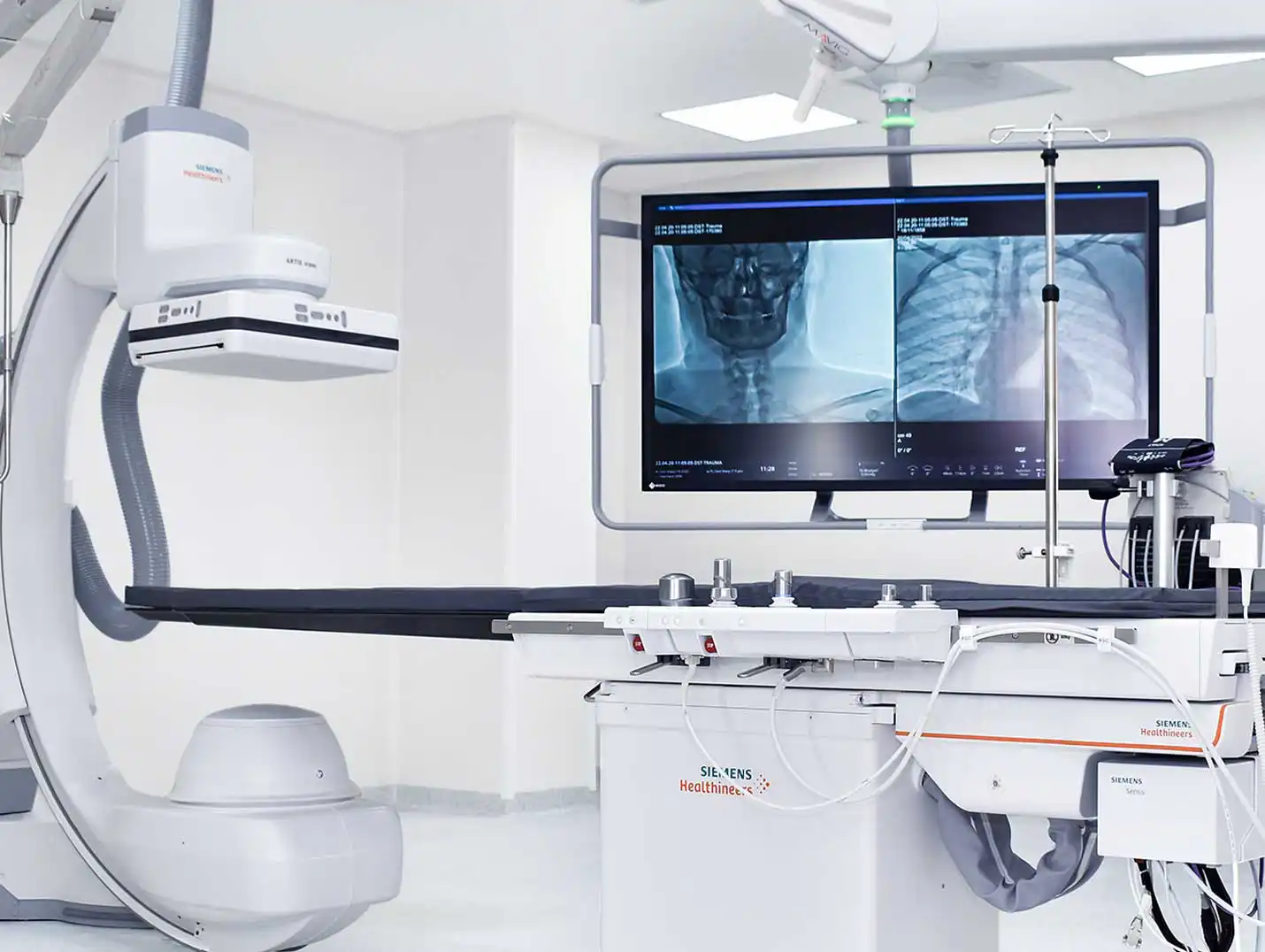
A cardiac catheterization procedure is performed in a specialized area called a catheterization lab. A catheter is inserted through an artery or vein in the groin or arm and guided to the area to be treated. A contrast dye is then injected to visualize the blood vessels, and the necessary procedures are performed.
The duration of a cardiac catheterization procedure can vary depending on the type of procedure and the complexity of the case. It typically takes between 30 minutes and 2 hours.
Although cardiac catheterization procedures are considered safe, there are some associated risks, which may include allergic reactions to the contrast dye, bleeding at the puncture site, infections, damage to blood vessels or the heart, and, in very rare cases, strokes or heart attacks.