Emergency and scheduled procedures aimed at reducing the incidence and effects of cardiovascular and neurovascular diseases, using the most advanced technology.
 155 Antonio Aguilar Street, Burocratas del Estado, San Luis, San Luis Potosí, México
 +52 4448340300
Ext. 5251
+52 4448340300
Ext. 5251
 24 hours
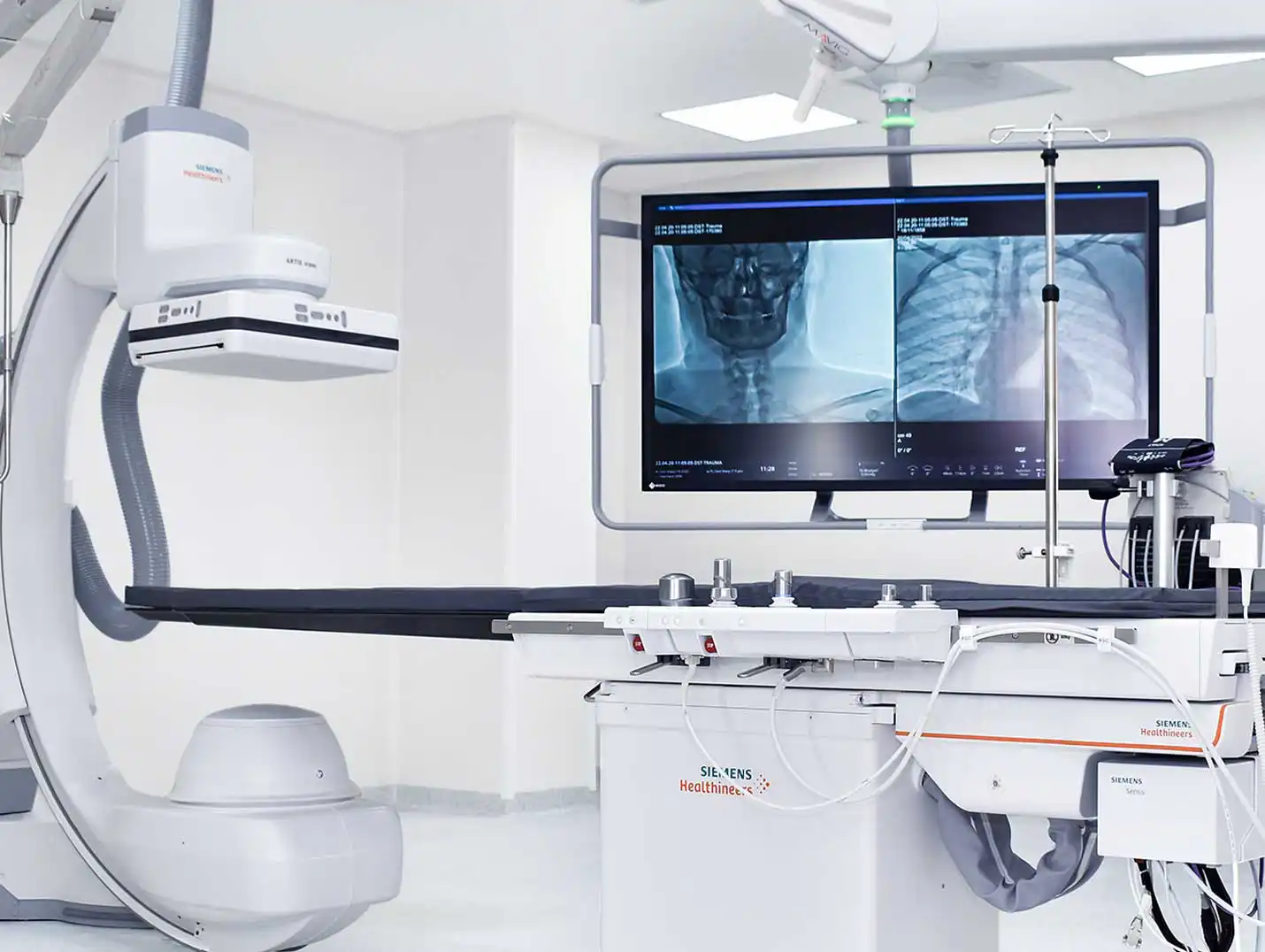
The Hemodynamics Unit is a specialized medical service offered at Hospital Angeles Potosí, which focuses on the study and treatment of cardiovascular and peripheral vascular diseases. Our team of highly trained professionals uses state-of-the-art technology to perform diagnostic and therapeutic procedures that allow us to evaluate the functioning of the circulatory system and treat various conditions.
In the diagnostic area, we offer studies such as angiography, which allows us to visualize the arteries and veins to detect blockages or abnormalities. We also perform stress tests and echocardiograms, which help us evaluate heart function and detect potential problems.
In terms of treatment, we offer procedures such as angioplasty, which involves widening narrowed or blocked arteries to improve blood flow. We also perform stent placements, which are devices used to keep arteries open and prevent blockages.
Our goal is to provide our patients with comprehensive, high-quality care using advanced techniques and highly trained staff. At Hospital Angeles Potosí, we care about your cardiovascular health and strive to offer you the best services in hemodynamics. Trust us with your health.
Hemodynamics is a medical specialty focused on the study and diagnosis of diseases of the cardiovascular system. It is used to assess the function of the heart and blood vessels, as well as to perform therapeutic procedures such as angioplasty and stent placement.
Hemodynamics provides detailed images of the cardiovascular system, which facilitates the diagnosis of heart and vascular diseases. In addition, it enables minimally invasive procedures, thereby reducing risks and recovery time for the patient.
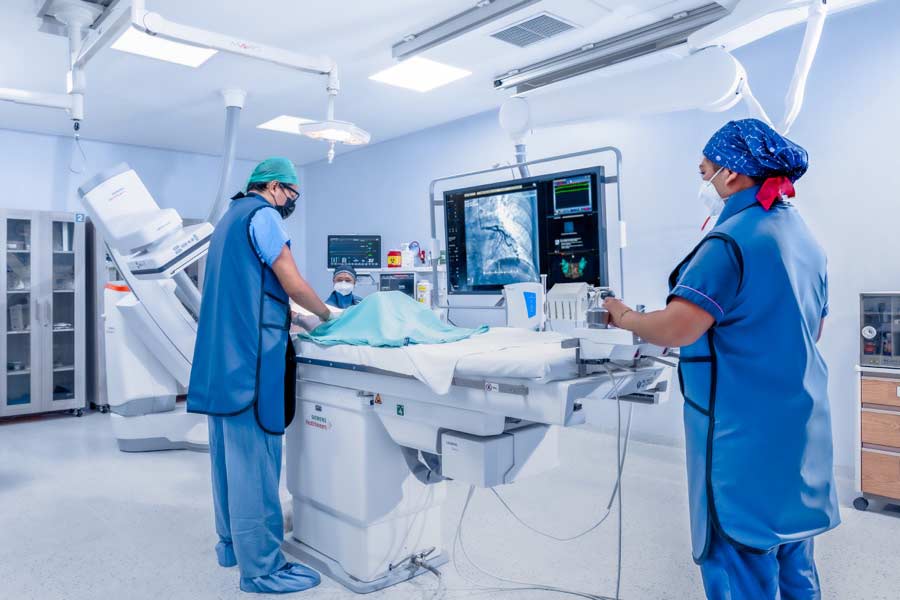
A hemodynamic study is performed in a specialized laboratory. A catheter is inserted into one of the patient’s arteries or veins and guided to the heart or blood vessels using real-time imaging. During the procedure, blood samples may be taken, blood pressure may be measured, and angiograms may be performed.
A hemodynamic study is indicated in cases of suspected heart or vascular disease, such as angina, myocardial infarction, coronary artery disease, and aneurysms, among others. It is also used to assess the effectiveness of previous treatments or to perform therapeutic procedures.
Although a cardiac catheterization is a safe procedure, there are some associated risks, such as allergic reactions to the contrast dye used, bleeding at the puncture site, infections, and damage to blood vessels or the heart, among others. However, these risks are rare and are usually managed by the medical team.